
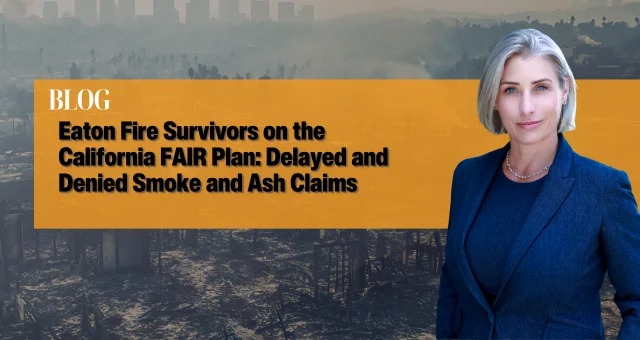
The Eaton Fire devastated Altadena and Pasadena, killing 19 people, destroying nearly 9,500 structures, and blanketing entire communities in toxic smoke and ash. For many survivors, the disaster did not end when the fire was contained. Instead, it continued through delayed insurance payments, denied claims, and forced reliance on the California FAIR Plan.
If you are a FAIR Plan policyholder struggling with smoke and ash damage from the Eaton Fire, what you are experiencing is not an exception. It reflects a broader, systemic failure in how wildfire claims are handled.
The Reality of the California FAIR Plan
The California FAIR Plan is often marketed as a safety net. In reality, it is insurance of last resort that frequently provides minimal coverage and maximum resistance when claims are filed.
Many Eaton Fire survivors were pushed onto the FAIR Plan after private insurers canceled or refused to renew policies in fire-prone areas. While the FAIR Plan technically provides fire coverage, policyholders commonly encounter:
- Long delays before inspections or claim determinations
- Disputes over whether smoke and ash damage is covered
- Partial payments that do not reflect the true cost of remediation
- Extensive documentation demands that stall cleanup and repairs
- Homes left uninhabitable while claims remain unresolved
Smoke and ash damage is not cosmetic. Toxic particulates can penetrate walls, insulation, ductwork, and personal belongings. Even when a home is still standing, it may be unsafe to occupy, particularly for children, seniors, and people with respiratory conditions. Yet FAIR Plan claims for smoke and ash damage are routinely minimized, delayed, or denied outright.
Why FAIR Plan Coverage Often Falls Short
The FAIR Plan was never designed to fully protect homeowners from the realities of modern wildfires. Their policies often narrowly interpret what damage is covered, exclude or severely limit coverage for toxic contamination, undervalue personal property losses, and fail to account for loss of use or displacement costs. As a result, many policyholders are left with homes that cannot be safely lived in and no meaningful path to recovery through insurance alone.
A Broader Pattern of Insurance Industry Issues
The FAIR Plan crisis is part of a larger trend across California and other wildfire-prone states. Insurers are scaling back coverage, raising premiums, and shifting risk onto homeowners while continuing to collect premiums and deny claims.
When private insurers withdraw, homeowners are forced onto the FAIR Plan. When FAIR Plan claims are delayed or denied, families are left without protection at the moment they need it most. This cycle leaves wildfire survivors trapped between inadequate coverage and mounting losses.
How Singleton Schreiber Helps FAIR Plan Policyholders
Singleton Schreiber represents Eaton Fire survivors and other wildfire victims who have been delayed, denied, or underpaid by the FAIR Plan, especially for smoke and ash claims.
Our attorneys understand the tactics insurers use to minimize payouts and delay accountability. We work to hold insurance companies responsible when they fail to fairly investigate, evaluate, and pay valid claims.
If you are a FAIR Plan policyholder affected by the Eaton Fire and your smoke or ash claim has been delayed, denied, or underpaid, you do not have to accept that outcome.
Contact Singleton Schreiber for a free consultation to understand your rights and options. We will help you pursue the compensation you deserve and push back against unfair insurance practices.
 Partner
Michelle Meyers, Partner
Michelle Meyers is a Partner at Singleton Schreiber and is a member of our Fire Litigation, Public Entity Law, Personal Injury and Wrongful Death, Insurance Recovery and Bad Faith practice groups. A ...
