Tesla has claimed that its vehicles are safer than others on the road, especially when using Autopilot. Unfortunately, the data doesn't necessarily back that up, with some research showing Tesla drivers are involved in more accidents than drivers of other vehicle types.
When a Tesla autopilot accident happens, crash victims need an attorney who understands the unique issues raised by crashes involving cars that incorporate self-driving technologies. There is one clear firm to turn to in these difficult situations: Singleton Schreiber.
Singleton Schreiber has a proven track record as a leading firm helping Tesla accident victims nationwide, with founding partner Brett Schreiber securing a record-setting $243 million in a landmark victory that represents the first time Tesla was ever held liable in a jury trial.
Our firm will bring our unique legal experience to your case to help you fight for the compensation you deserve -- whether your Tesla crash was caused by a careless driver or by the failures of Tesla's technologies.
To find out more about how we can bring our unparalleled knowledge of Tesla crashes to your claim, contact our Tesla Autopilot crash attorneys today.

Tesla risks and dangers
Tesla has the highest auto accident rate of any brand, according to Forbes Advisor. The data backing up this claim comes from LendingTree, which analyzed claims from QuoteWizard between January 1, 2024, and December 31, 2024.
Forbes revealed that:
- Tesla drivers had 26.67 accidents per 1,000 drivers in 2024, up from 23.54 the prior year. This was considerably higher than the 23.15 accidents per 1,000 Ram drivers, who had the second-highest crash rate.
- The first fatal crashes involving Tesla's Autopilot occurred less than a year after the Advanced Driver Assistance System (ADAS) was released in 2015
- An analysis by the National Highway Traffic Safety Administration reported that the death rate for Tesla's Autopilot technology is higher than reported estimates.
- Hundreds of non-fatal accidents involving Autopilot have been documented
- The National Highway Traffic Safety Administration verified that 44 of 51 reported Tesla Autopilot fatalities occurred during Full Self-Driving Mode (FSD)
Car and Driver also reported 736 crashes involving Tesla's Autopilot between 2019 and 2023. And issues with Autopilot led to a December 2023 recall, after which Tesla claimed that the problems had been resolved. However, collisions continued to occur.
Why are Tesla Autopilot Accidents happening?
NHTSA investigations reported on by Forbes, as well as additional investigations into autopilot operations over the years, have revealed several problems with Tesla's self-driving features, including:
- Failure to recognize other vehicles
- Misinterpretation of road conditions such as sunlight glare, road curves, and non-standard signs
- Problems with nonstandard road layouts
- Issues detecting faded lane lines
- Problems at complex intersections
- Erratic maneuvers such as unintended lane changes
- Unexpected disengagement with the self-driving system shutting off suddenly
- Phantom braking
- Software glitches
- Challenges in detecting stationary vehicles
- Insufficient Autopilot driver engagement
- Poor operational design
- Drivers being misled about the capabilities of Tesla Autopilot
The landmark multi-million dollar verdict that Singleton Schreiber secured for our clients involved a case where many of these issues occurred, including Tesla's failure to detect stop signs and flashing red lights at an intersection.
Unfortunately, as autopilot use has increased, the risk of accidents has risen. Past and current Tesla models that incorporate Autopilot include:
- Model S
- Model 3
- Model X
- Model Y
- Cybertruck
Autopilot technology has evolved over the years, with earlier models offering more basic features like traffic-aware cruise control and autosteer, while newer models added auto lane change, navigate on autopilot, vehicle summoning, and faster processing for traffic light and stop sign control.
As technologies have evolved, new crash risks have been created as drivers hand over their safety responsibilities to Tesla's software.
What should you do after a Tesla accident?
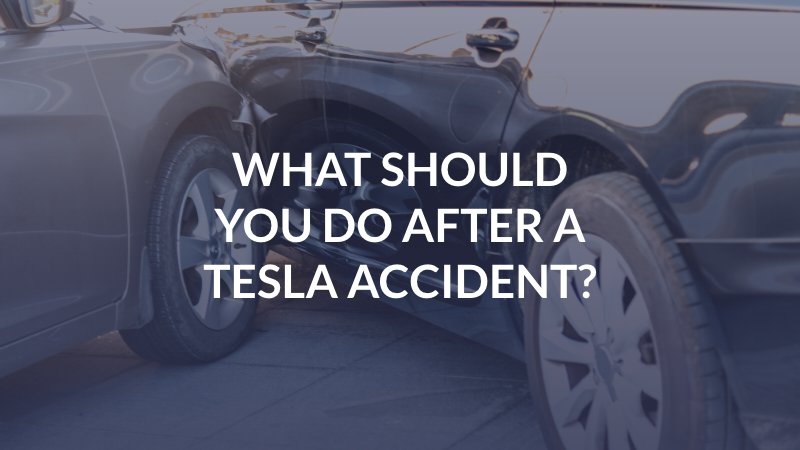
Tesla auto accident claims are complicated because some accidents are caused by failures of the vehicle software, while others occur due to driver mistakes.
It's important to determine whether the car or the driver was ultimately responsible for the accident because this can affect whether you pursue a claim against Tesla, against the motorist operating the vehicle, or both.
To navigate these complex cases, your first call should be to Singleton Schreiber. Our team has experience with Tesla accidents that many other firms can't match.
Some of the services we offer include:
- Gathering evidence after a Tesla accident. Tesla vehicles come equipped with Event Data Recorders and dashcams that can provide invaluable evidence about how a crash happened. We'll work to gather the information the vehicle recorded, as well as to obtain police statements, witness statements, and expert testimony surrounding the crash cause.
- Determining who can be held liable for the accident. In some Tesla crashes, the driver is solely to blame. In others, a problem with the vehicle or its technology makes Tesla responsible for the resulting harm. It's critical to identify all defendants, as Tesla has more substantial insurance than individual drivers and can pay out larger damage awards.
- Identifying appropriate legal arguments. In the landmark Tesla case, where Singleton Schreiber helped our client recover millions, we demonstrated that while Tesla had designed Autopilot for use on controlled-access highways, its use wasn't restricted to these roads, and drivers were enticed to activate the system even in local residential areas where it couldn't safely operate. This had fatal consequences.
- Negotiating a settlement: Many claims settle outside of court, allowing you to avoid the stresses of a trial. Our firm will help you to negotiate a settlement with the other driver's insurer, or with Tesla's insurer, or both, to try to secure a fair settlement offer.
- Going to court: If no agreement is reached, litigation becomes necessary. Singleton Schreiber has demonstrated our litigation skills, recovering millions in Tesla accident claims.
Getting help from a Tesla auto accident attorney
Legal rules related to self-driving cars are still evolving, and not all attorneys have demonstrated experience in these complex claims. Singleton Schreiber has been a leader in Tesla accident cases, which is why we now help victims nationwide who have suffered harm.
To find out more about how our Tesla autopilot crash attorneys can bring our extensive knowledge and skill to your case, give us a call or contact us online today.